If you want your business to grow, getting more enquiries may seem like the obvious goal. But if those enquiries turn into work that leaves very little after delivery costs, you could become busier without making the business any better off.
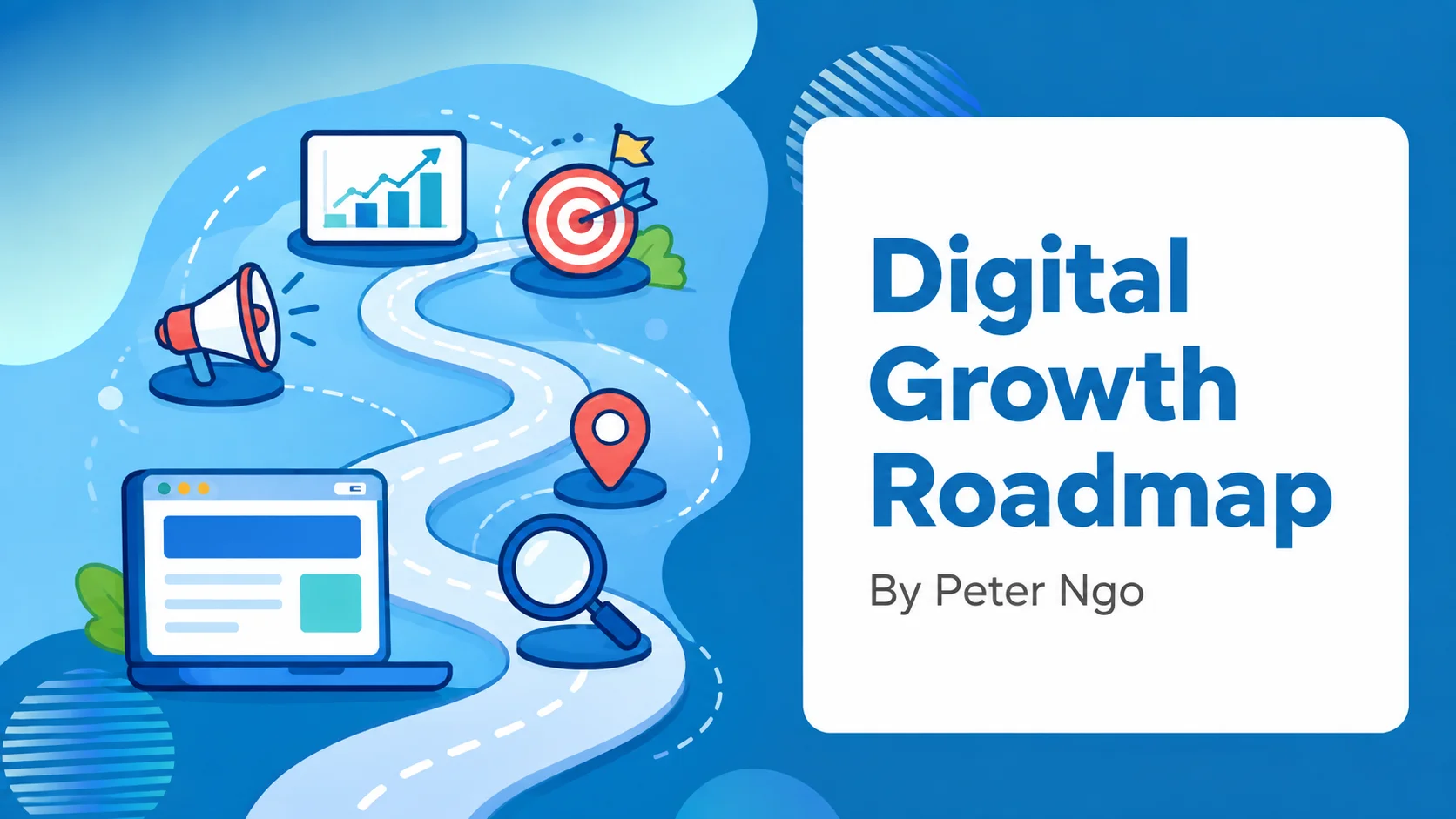
That is where I would start a digital growth roadmap. Before recommending more SEO, content or PR, I want to understand what kind of work you want more of and whether your business can deliver it. The marketing plan should follow that decision.
Would different work make better use of your available time?
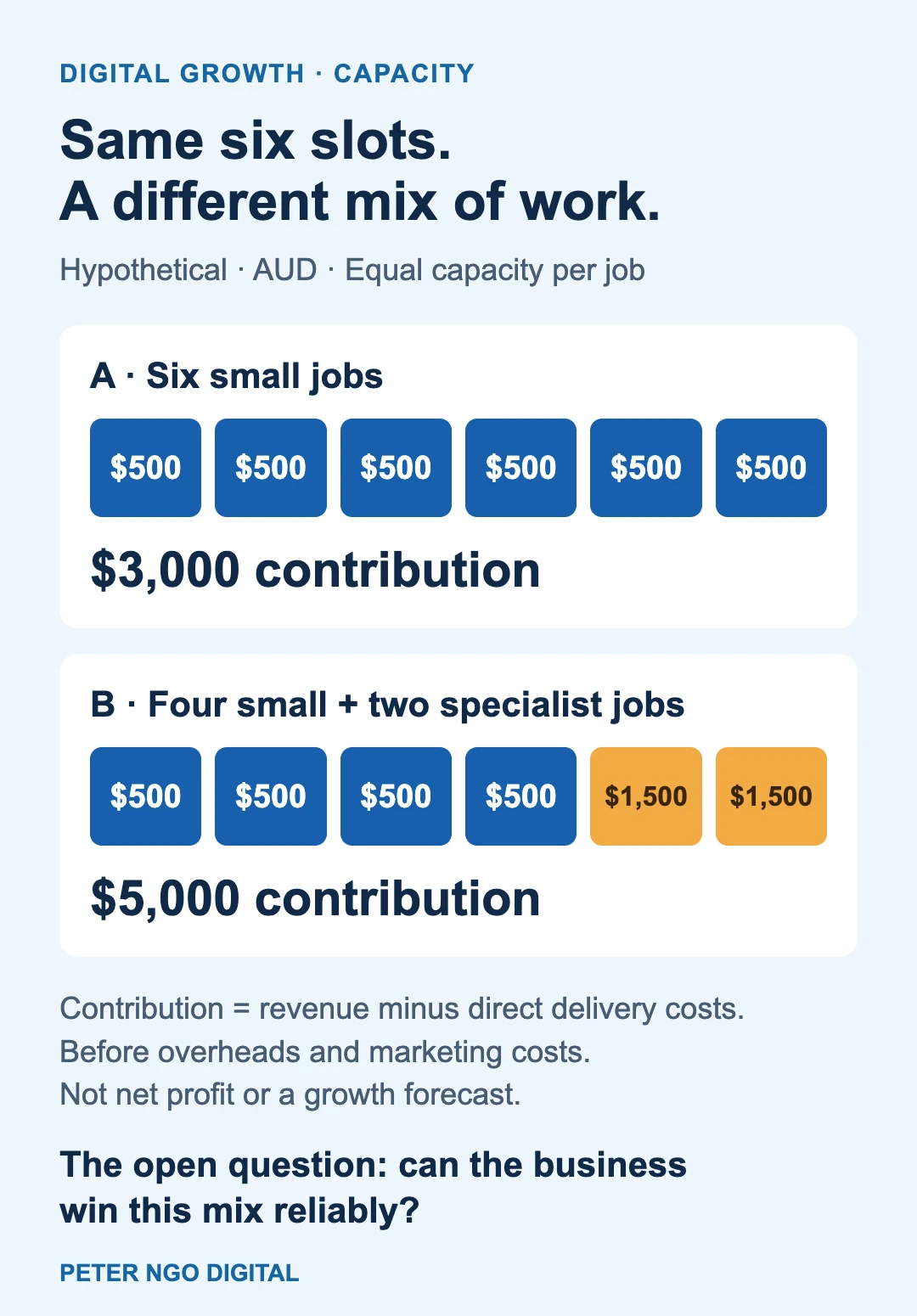
Let’s say you run a specialist service business and have room for six new jobs next month. A small job leaves $500 after its direct delivery costs, while a specialist job leaves $1,500. For this hypothetical example, each job takes the same amount of capacity. All figures are in Australian dollars and are before overheads and marketing costs.
Six small jobs would leave $3,000. If you delivered four small jobs and two specialist jobs instead, you would have $5,000 from the same six slots. You haven’t taken on more jobs, but the different mix leaves more money to cover overheads, marketing and profit.
That doesn’t show that marketing can bring you those two specialist jobs. It explains why I would be interested in the type of work you attract, rather than only counting how many enquiries arrive.
In this situation, the roadmap would need to help us understand whether there are suitable customers for the specialist service and how to reach them, while keeping within what your team can deliver.
You still need to protect the work that pays the bills now
Looking at those figures, it could be tempting to stop promoting small jobs and focus entirely on the specialist service. But let’s say specialist enquiries are irregular and take longer to become paying customers. If you turn away dependable work too early, you could end up with empty capacity instead of better jobs.
I would be more comfortable testing the specialist offer while keeping a base of existing work. That gives you a chance to learn whether buyers understand and want the service without relying on demand that hasn’t been established yet.
So the roadmap needs to explain how you can explore the opportunity while protecting current income. A target for more valuable enquiries on its own doesn’t address what happens if those enquiries take longer than expected to arrive.
What needs to happen before you spend more on promotion?
For this business, the first useful change might be a clearer explanation of the specialist service, supported by examples or evidence you can genuinely share. Search demand and the enquiries you already receive could help show whether suitable buyers are looking for that work.
If people consistently misunderstand the offer, I would want to resolve that before expanding the promotion. Otherwise, more attention could bring more confused visitors to the same unclear page.
Once there is evidence of suitable interest and your team can handle the work, an authority building campaign has a clearer purpose. It can help more potential customers learn about a service you have reason to believe they want.
That is why I wouldn’t set a universal month for PR to start or assume every business needs a redesign first. The next step depends on what we still need to understand and what the next investment relies on.
Can your team actually deliver the work you want to attract?
The earlier example assumes every job uses the same amount of capacity. If a specialist job takes three times as long as a small job, the apparent advantage may disappear. You would need to compare what remains after delivery costs against the time and resources each job uses.
There could also be a qualification or skill your team needs before offering the service. More demand wouldn’t solve that gap, so the roadmap would need to take it into account before promising growth through promotion.
You might want more profitable work, a steadier workload or less dependence on one type of customer. Those goals can lead to different marketing priorities, even for the same business.
When we talk about your digital growth roadmap, I want you to come away understanding what we’re trying to improve, why the next piece of work is worth doing and what would cause us to change direction. That gives you a basis for deciding where your money and time should go, rather than another list of marketing tasks.
Related Digital PR guides
How much does Digital PR cost in Australia? Start with the scope · Digital PR vs link building: which does your business need? · How to measure Digital PR results beyond backlinks · When is a small business ready for Digital PR?