If a PR campaign earns links to your research, you may still wonder how that helps people find the service you sell. The article that attracts attention and the page that explains your offer often have different jobs, so earning the link is only part of the picture.
I would want someone who finds the research useful to be able to understand what your business does next. That doesn’t mean every reader will become a customer, but there should be a sensible connection for the people who want to know more.
A reader may reach your service through your research
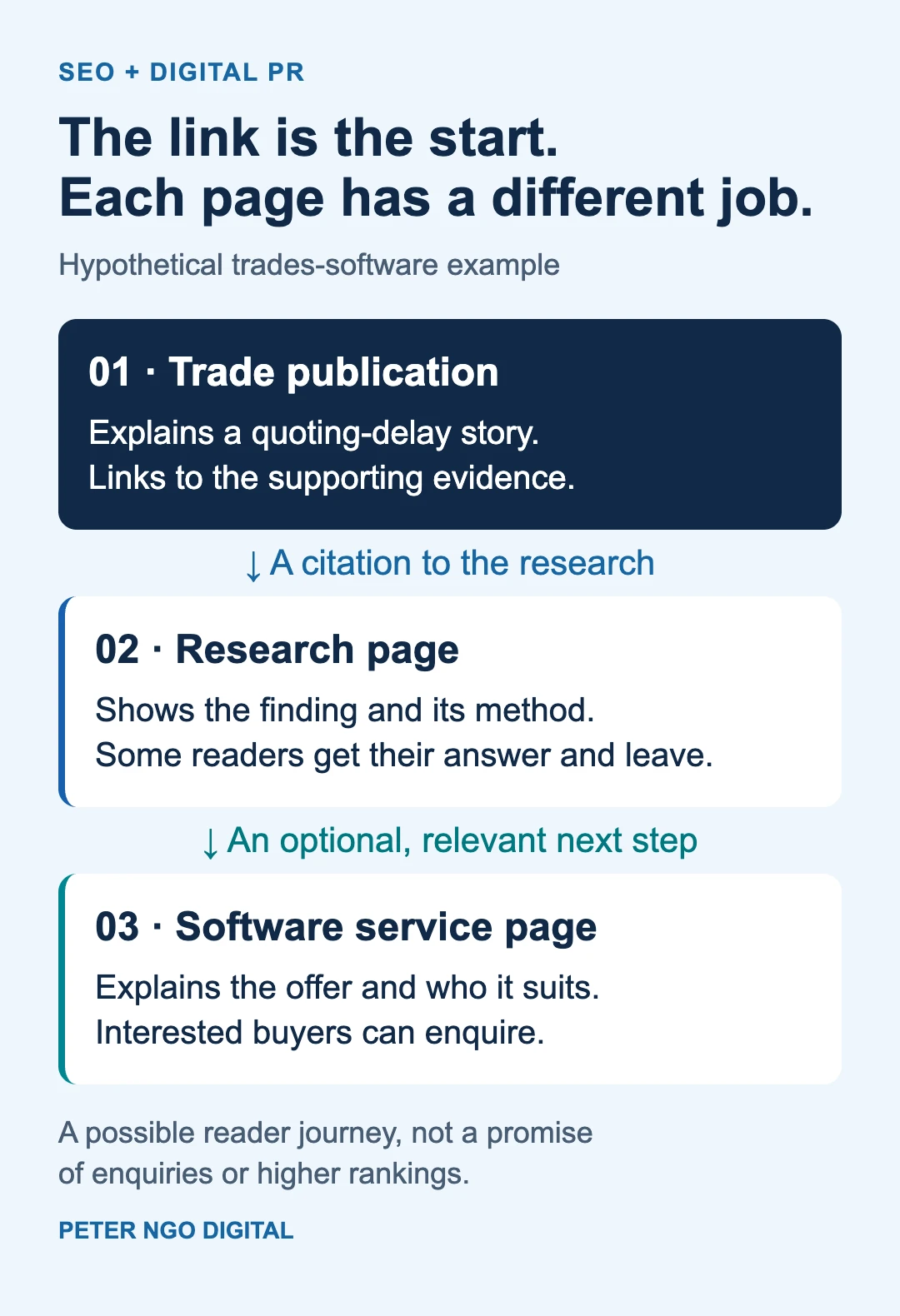
Let’s say you work for a software company that helps trades businesses prepare quotes. Your team publishes a study about quoting delays, and a trade publication links to it because the findings support a story.
Someone following that link is arriving to read the research. They may only want to understand the findings, but if quoting delays are a problem in their own business, they could also be interested in how your software helps.
A relevant link from the study to your service page gives that reader a way to explore the product. They can see the connection between the problem you researched and the service you offer, without having to work out where to go on your website.
This is a hypothetical example, and the graphic shows a possible route rather than a guaranteed journey. Some people will read the study and leave, while others may want to learn more about your software.
The research still needs to answer the reader’s question
If the journalist is citing a finding, your study is the page that lets their readers check it. Asking for a link to a sales page instead may not help them, because that page might not contain the evidence behind the story.
But your research page can also leave readers stuck if it explains the findings without saying anything useful about the company behind them. Someone interested in your expertise may not realise you offer a service that addresses the same problem.
I would keep the research easy to read and make the connection to your service clear where it is relevant. The reader can then decide whether to explore the product, rather than being pushed into a sales page before they have found the explanation they came for.
Search can help you understand the problem behind the story
Search research can show you the questions people ask and the words they use to describe a problem. That can help you choose a campaign subject that has a connection to your customers, rather than finding an interesting story first and trying to fit your business into it later.
But a popular search term isn’t automatically a good media story. Someone searching for quoting software may want to compare products, while a trade editor could be interested in why quoting delays happen or what they mean for businesses.
Those interests can connect even though the pages answer different questions. Your service page can explain the software, while the research gives the publication something useful to discuss.
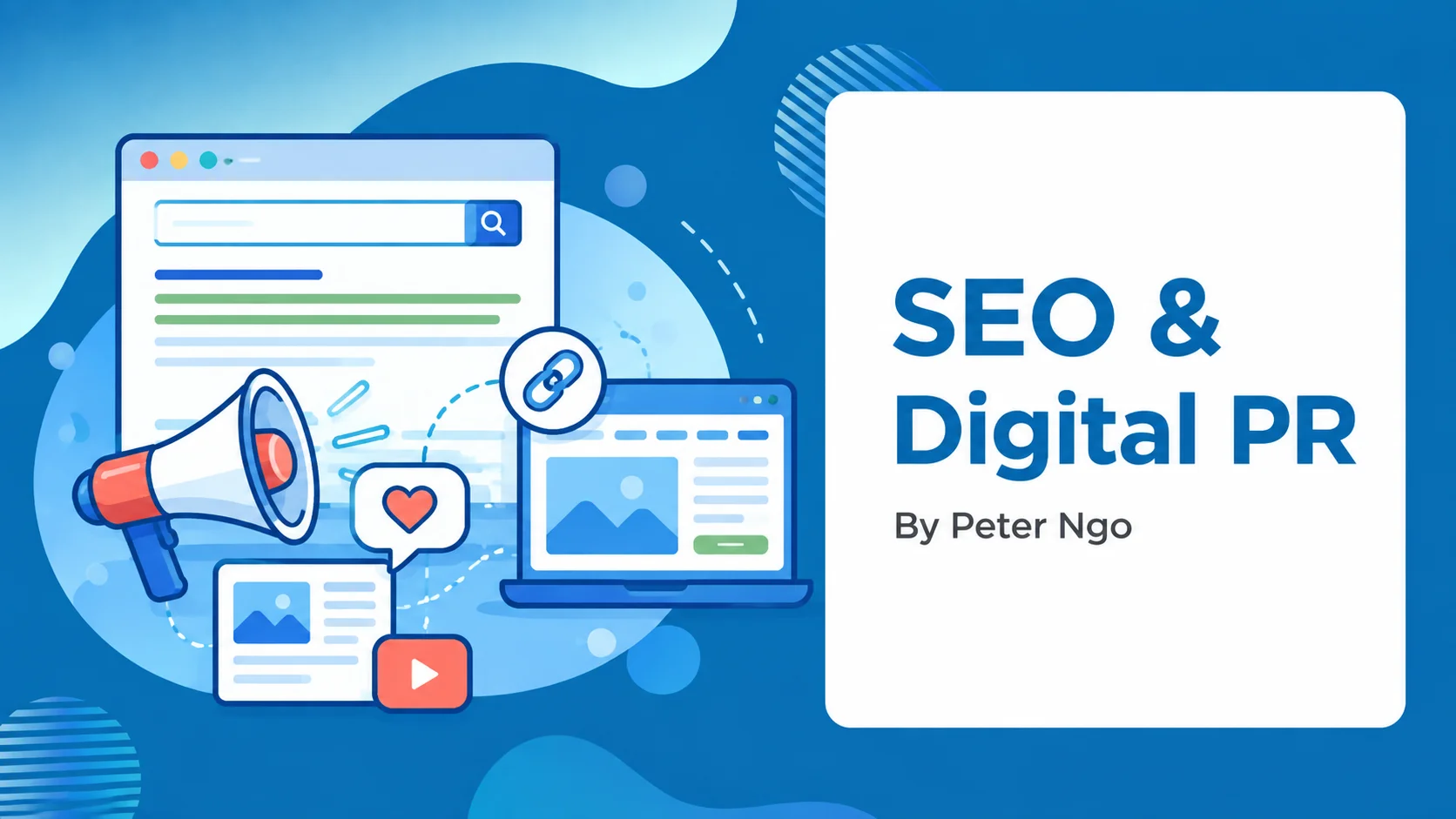
That is where I see SEO and Digital PR working together. Search helps us understand what potential customers need, and the PR idea needs a reason for someone outside the business to cover it.
The page needs to remain useful after the campaign
Once the coverage is published, people may continue to follow its links. If your research page disappears during a redesign, they can no longer read the evidence the article referred to. If the page remains but stops explaining the findings, it becomes less useful for much the same reason.
So I would want to know who will look after that page after the campaign ends. If the findings describe an earlier period, the date should remain clear rather than making old research look current.
The connection to your service also needs to make sense as the business changes. A reader should be able to understand the study and explore a relevant offer, even if they arrive well after the launch.
None of this guarantees higher rankings. It explains how coverage can bring someone to useful content and give an interested reader a route to your service. When we discuss SEO and PR together, I would want that connection to be clear rather than assuming a backlink will do everything on its own.
Related Digital PR guides
How much does Digital PR cost in Australia? Start with the scope · Digital PR vs link building: which does your business need? · How to measure Digital PR results beyond backlinks · When is a small business ready for Digital PR?